
In this section, we aim to answer tiny houses frequently asked questions (FAQ) in detail, taking into account the latest trends and legal regulations as of 2026.
»» Follow Trend House Designs on social media to be informed about current posts ««
1. What Is a Tiny House and Why Should It Be Preferred?
Question: What exactly are tiny houses, and what advantages do they offer compared to traditional housing?
Answer: Tiny houses are small-scale dwellings, typically ranging between 10 and 40 square meters, offering functional and compact living spaces. They are preferred by individuals who embrace a minimalist lifestyle, seek financial freedom, care about the environment, and dream of a portable way of living.
Compared to traditional homes, they are more affordable, energy-efficient, eco-friendly, and provide mobility. Tiny houses are generally divided into two main categories: wheeled and stationary, both offering customizable design options.
2. How Are Tiny House Prices Determined and How Can I Manage My Budget?
Question: What factors affect the cost of a tiny house, and what should I consider when choosing one within my budget?
Answer: Tiny house prices depend on factors such as size, material quality, interior and exterior design details, insulation features, smart home systems, mobility (wheeled or not), and whether it is turnkey or a DIY project. For example, a basic wheeled tiny house may cost significantly less than a stationary one built with premium materials and custom design.
To manage your budget, first identify your needs and priorities, compare offers from different builders, and consider long-term operating costs (energy, maintenance, etc.). Remember, cutting corners on quality to reduce initial costs may lead to higher repair and maintenance expenses in the future.
3. Are Permits and Zoning Approvals Required for Tiny Houses? What Is the Situation in 2026?
Question: What is the legal process for setting up a tiny house? Is it possible to place one on farmland or unzoned areas?
Answer: Permits and zoning approvals for tiny houses vary depending on the type (wheeled/stationary) and local regulations. In Turkey, there is no specific legislation directly regulating tiny houses; they are evaluated under existing zoning and traffic laws.
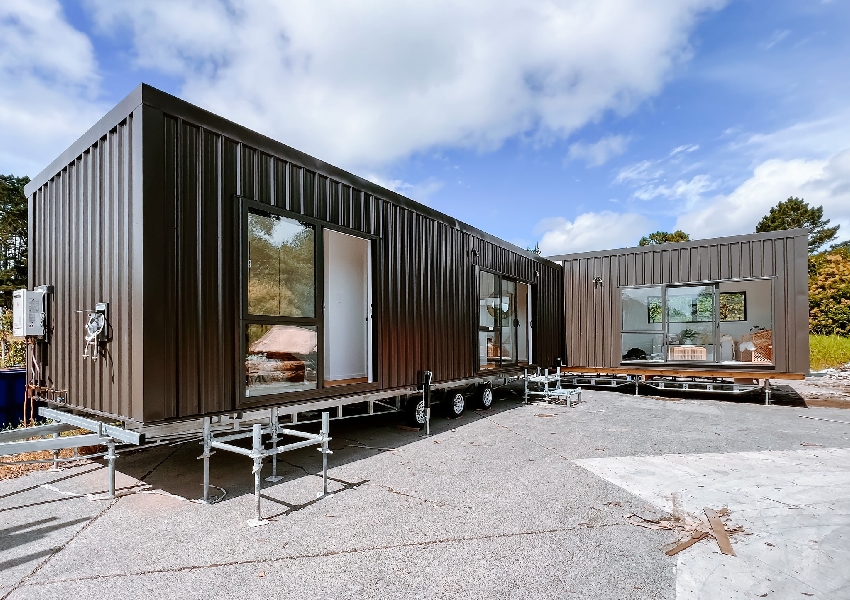
• Wheeled Tiny Houses (Mobile Homes): Registered as O2-class trailers, wheeled tiny houses are considered vehicles when they have a license plate, registration, and type approval. They fall under the Highway Traffic Law and can be moved and used for accommodation. However, if permanently placed on land with utility connections (electricity, water, sewage), a building permit may be required.
• Stationary Tiny Houses: If built on a permanent foundation or used as a primary residence, they are subject to zoning laws like traditional buildings and require a building permit. Constructing stationary tiny houses on farmland or unzoned areas is generally illegal and may result in penalties. As of 2026, local authorities have increased inspections to prevent uncontrolled tiny house settlements.
In all cases, consult local authorities before investing to confirm legal compliance.
4. How Is Insulation and Energy Efficiency Achieved in Tiny Houses?
Question: Is it possible to keep a tiny house warm in winter and cool in summer? What solutions ensure energy efficiency?
Answer: Achieving high insulation and energy efficiency is crucial for comfort in tiny houses. Due to their small size, proper insulation materials and techniques minimize energy use. High-performance insulation (rock wool, fiberglass, polyurethane foam) prevents heat loss, while double or triple-glazed windows improve efficiency.
Renewable energy integration is common—solar panels can power electricity needs, while portable power stations and lithium battery storage support off-grid living. Energy-efficient appliances, LED lighting, and smart thermostats further optimize consumption. Proper ventilation systems also improve air quality and prevent moisture buildup.
5. What Is the Lifespan and Durability of Tiny Houses?
Question: How long do tiny houses last, and how safe are they against natural disasters?
Answer: The lifespan and durability of a tiny house depend on material quality, construction techniques, and regular maintenance. Professionally built tiny houses with high-quality materials can last 30–50 years or more. For wheeled models, chassis and wheel durability are critical, with protective coatings against rust and regular wood maintenance extending longevity.
In terms of natural disasters, tiny houses are lightweight and often more flexible against earthquakes compared to concrete structures. However, they must be properly anchored or positioned to withstand strong winds and storms. Compliance with international standards and skilled craftsmanship enhances overall durability.
6. What Design and Customization Options Do Tiny Houses Offer?
Question: How can tiny houses be customized to suit personal preferences and needs? Are different models and sizes available?
Answer: Tiny houses offer extensive customization options. Smart storage solutions, foldable furniture, and multifunctional spaces maximize efficiency. Layouts for kitchens, bathrooms, and bedrooms can be tailored to user preferences. Large windows, skylights, and glass doors enhance natural light and create a spacious feel.
Aesthetically, designs range from modern minimalist to industrial or bohemian styles. Exterior finishes, colors, and roof types can be personalized. For wheeled models, towing capacity and exterior design are considered. Smart home technology integration allows remote control of lighting, heating, security, and entertainment systems, making tiny house living modern and convenient.
7. How Is Tiny House Installation and Ground Preparation Done?
Question: How long does it take to set up a tiny house, and what should be considered for ground preparation?
Answer: Installation time depends on the type and complexity of the project. Wheeled tiny houses are usually delivered fully built and only require positioning and utility connections. Stationary tiny houses follow construction-like processes but are faster, with modular structures allowing completion within weeks.
Ground preparation is vital for safety and longevity. Wheeled models need a flat, stable surface, while stationary ones require permanent foundations such as concrete slabs or footings. Soil studies help determine the best foundation system. Utility connections (water, electricity, sewage) must be carefully planned during this stage.
8. Are Tiny Houses Eco-Friendly and How Do They Contribute to Sustainability?
Question: How do tiny houses support sustainability goals, and what is their environmental impact?
Answer: Tiny houses are a key part of sustainable living, with eco-friendly features. Their small size reduces resource use and construction waste. Energy-efficient designs minimize heating and cooling needs. They can easily integrate renewable energy (solar panels), rainwater harvesting, and greywater recycling systems, reducing water and energy footprints.
Using ecological materials strengthens their eco-friendly profile. By promoting minimalist lifestyles, they encourage reduced consumption and waste. These qualities make tiny houses attractive to environmentally conscious individuals seeking a sustainable future.
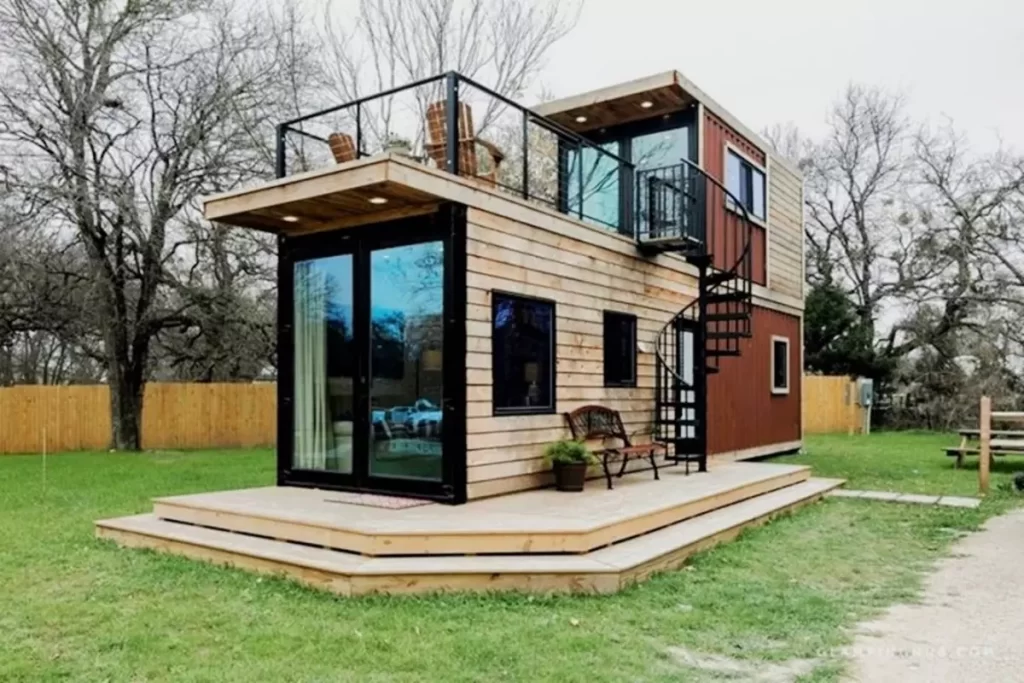
Conclusion: Tiny Houses Frequently Asked Questions (FAQ)
In short, tiny houses have become a popular housing option for those embracing minimalism and seeking a sustainable, nature-connected lifestyle.
Click here for more information about container homes.
We would be very happy if you share your new ideas with us.
Don’t forget to check out and share great ideas about Trend House Designs. Thanks!
↓↓ Check Out Other Fascinating Trending Home Stories ↓↓
- Happy Valley Wooden Camping Experience: Discover Charming Rustic Living
- Ultra Modern Looking Glass Lodge: A Modern Sustainable Living Experience in the Woods
- 40 m2 Hanging Container Villa Project: Two-Story Modern Minimalist Living Space for Rent
- Living in the Heart of Nature: Your Dream Treehouse Can Become a Reality
- 20m2 Mobile Tiny House Hazel Model: The Most Beautiful Tiny House of 2026
↓↓↓ For More Content ↓↓↓
Keywords: house designs, container house, cozy homes, minimalist living, small cabins, tiny house, cozy tiny house, tiny house projects, portable tiny house, affordable small homes, off-grid tiny house, tiny house plans, minimalist living space, compact home design, DIY home building ideas.



Wonderdul…
Thank you for your kind comments.